
The Ultimate Guide to Perfect Gaming Posture
Your Quick Guide to Better Gaming Posture
Gaming posture tips every gamer needs to know, fast:
- Sit back fully in your chair with your lower back supported
- Keep feet flat on the floor, knees at roughly 90 degrees
- Position your screen so the top third sits at eye level
- Relax your shoulders — pull them down and back, away from your ears
- Keep elbows at 90 degrees with forearms parallel to the desk
- Hold your head neutral — ears directly above your shoulders
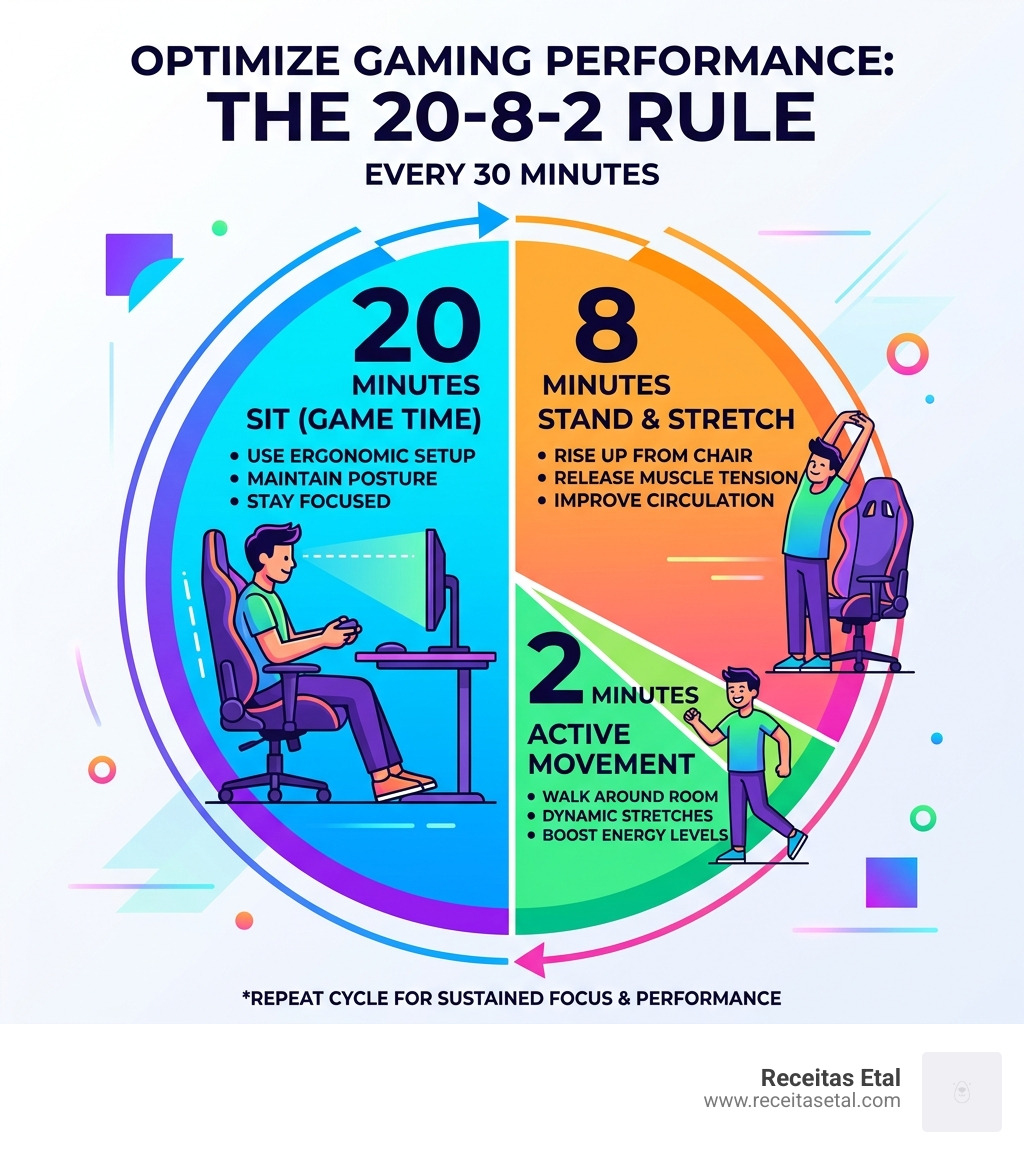
- Take a break every 30 minutes to stand, stretch, and move
Picture this: you’ve just finished a four-hour gaming session. Your neck is stiff, your lower back aches, and your shoulders feel locked in a permanent hunch. Sound familiar?
You’re not alone. More than 212 million Americans play video games regularly, and most of them are sitting for hours at a time without thinking much about how their body is positioned. That adds up fast — 72% of gamers play more than 13 hours per week.
Here’s the problem. Long sessions in a static, unsupported position create what ergonomics experts call static load — sustained muscle tension that restricts blood flow and slowly grinds down your joints and soft tissue. Gamers who play more than three hours a day are over five times more likely to develop musculoskeletal disorders than those who don’t.
And it’s not just about pain. Poor posture quietly drains your focus, slows your reaction time, and shortens your endurance — the exact things you need to perform at your best.
The good news? Small, deliberate changes to how you sit and set up your space can make a dramatic difference.
Why Your Gaming Posture Tips the Scales for Health and Performance
When we talk about gaming posture tips, we aren’t just trying to sound like your middle school gym teacher. We’re talking about your ability to stay in the game—literally.
Most of us have fallen into the “Golem” position at some point: back curved like a question mark, nose inches from the screen, and shoulders up by our ears. This isn’t just an aesthetic issue; it’s a biological one. Poor posture creates musculoskeletal imbalances that can lead to chronic tension headaches and long-term nerve impingement. In fact, research shows that gamers who ignore ergonomics have a 5x higher risk of developing physical disorders.
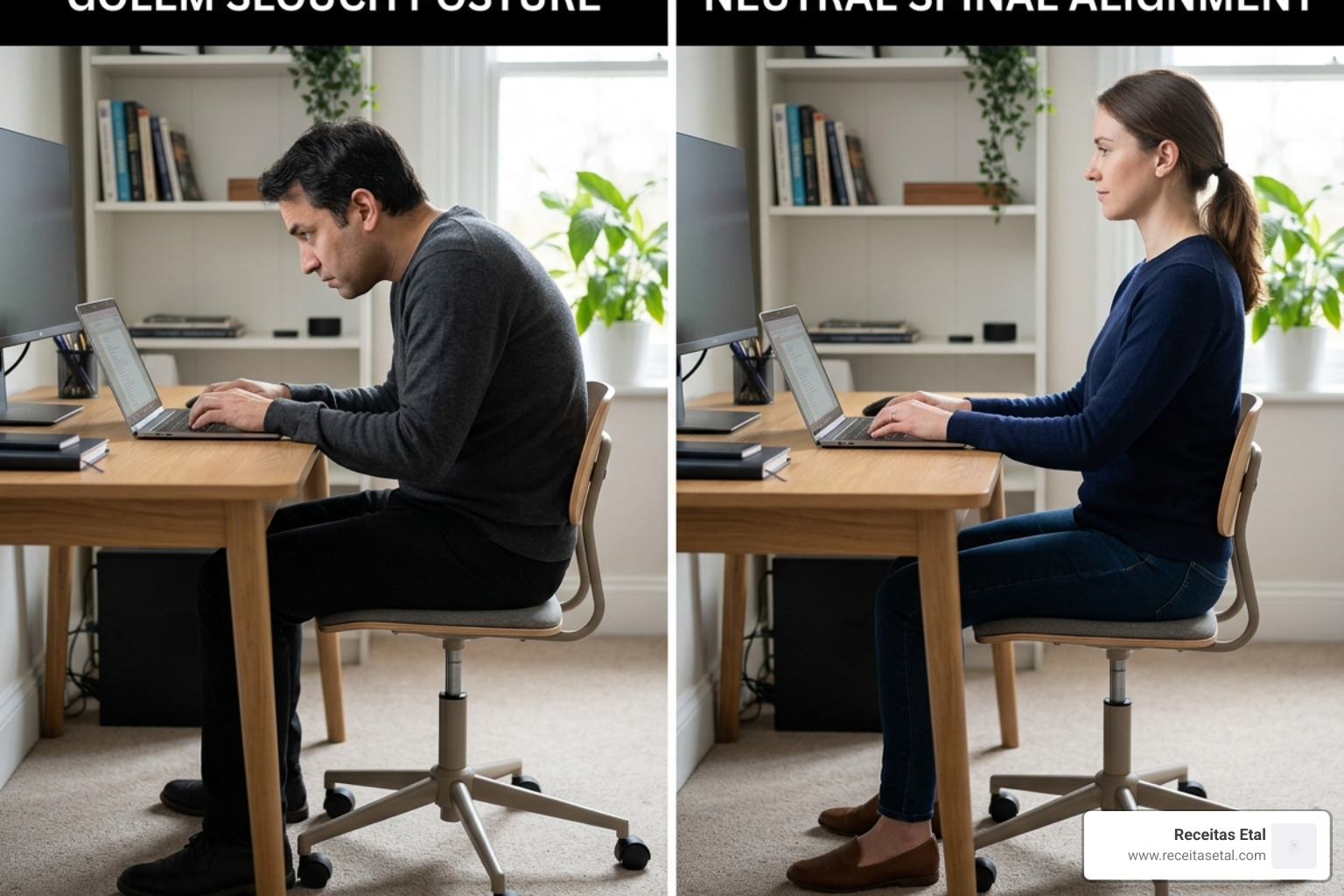
But here is the secret most pros won’t tell you: How To Improve Your Gaming Posture | UPMC HealthBeat suggests that proper alignment can actually give you a 10-15% performance boost. Why? Because when your spine is aligned, your lungs can expand fully, increasing oxygen flow to your brain. This improves your focus and reaction time. When you aren’t fighting a literal “pain in the neck,” your brain can dedicate 100% of its processing power to the match at hand.
The Anatomy of the Ideal Gaming Posture
To master your setup, we need to look at the body from the ground up. Think of your posture as a kinetic chain; if the base is off, everything else follows.
| Body Part | Slouching Position | Neutral/Ideal Position | Spinal Pressure |
|---|---|---|---|
| Lower Back | Rounded/C-Curve | Natural S-Curve (Lordosis) | ~150-190% Body Weight |
| Neck | Forward Lean | Ears over Shoulders | ~10-12 lbs of force |
| Pelvis | Tilted Back | Neutral/Level | Even Weight Distribution |
The 10-Pound Rule
Your head weighs approximately 10 to 12 pounds. For every inch you lean your head forward, you add an extra 10 pounds of strain on your neck muscles. If you’re leaning three inches forward to see a sniper across the map, your neck is trying to support a 40-pound weight! Keeping your ears directly over your shoulders is one of the most vital gaming posture tips for preventing “gamer neck.”
The 90-Degree Rule
According to How to Improve Gaming Posture: A Complete Guide, your joints should ideally rest at 90-degree angles. This applies to your ankles, your knees, and your elbows. This “neutral” positioning minimizes the effort your muscles have to exert just to keep you upright, preserving your energy for the game.
Ergonomic Setup: Optimizing Your Gaming Station
You don’t need a $2,000 chair to have a healthy setup, but you do need to understand how to adjust what you have.
Monitor Height and Distance
The top third of your monitor should be at eye level. If it’s too low, you’ll naturally tilt your head down, leading to rounded shoulders. It should also be about an arm’s length away. If you find yourself leaning in to see small text, increase the UI scale in your game settings rather than moving your face closer to the glass.
The Chair and Desk
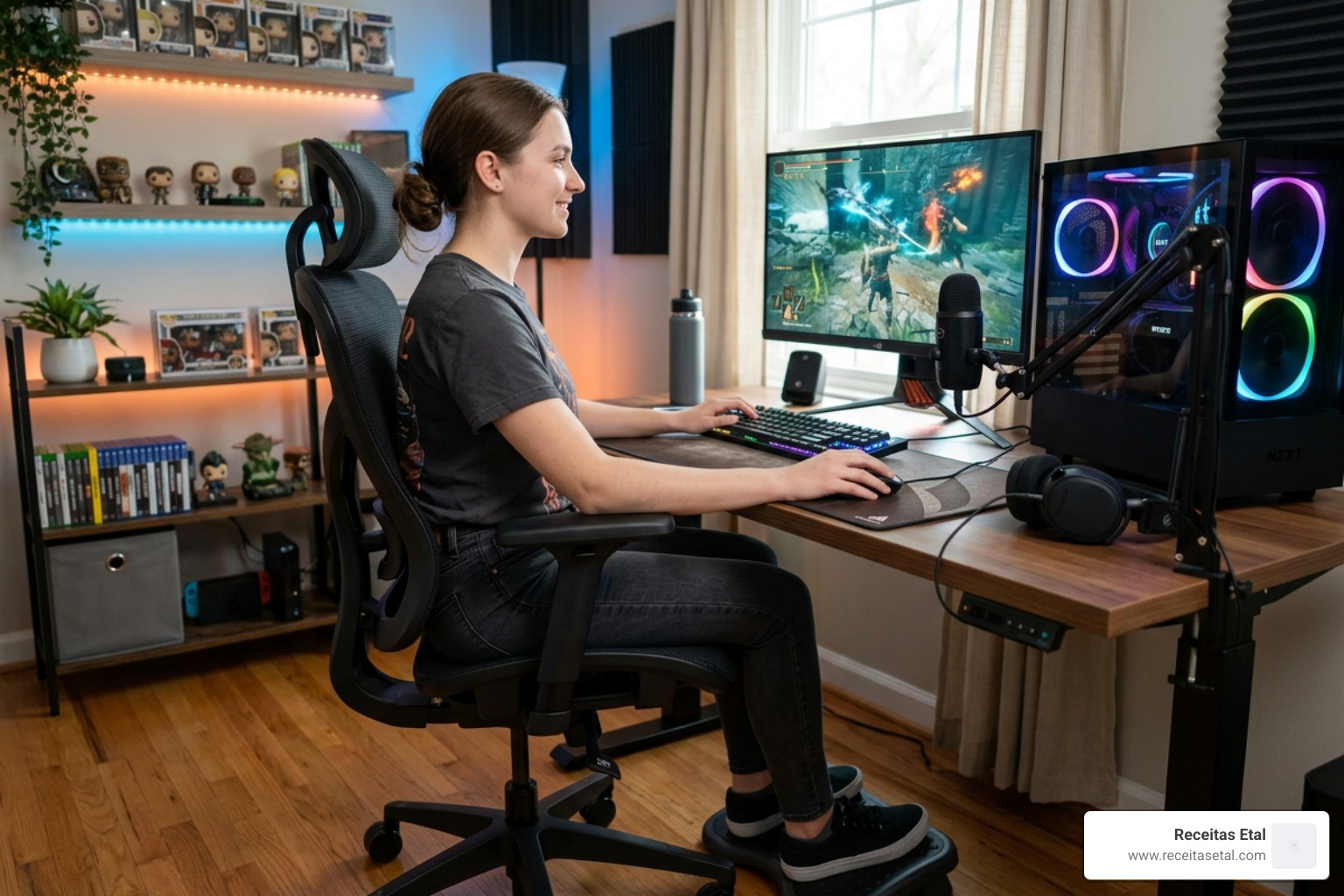
Your chair should support the natural “S” curve of your spine. If your chair doesn’t have built-in lumbar support, a rolled-up towel or a small pillow placed at the small of your back can work wonders.
- Seat Pan Depth: You should have a 2-3 finger gap between the edge of the seat and the back of your knees. This ensures blood flow to your lower legs isn’t restricted.
- Armrests: Adjust them so your shoulders can stay relaxed (not shrugged) while your elbows bend at 90 degrees.
- Footrests: If your feet don’t touch the floor when your chair is at the right height for your desk, use a footrest. Dangling feet pull your pelvis out of alignment.
Specialized Gaming Posture Tips for Every Platform
Not all gaming happens at a desk. Whether you’re a mobile legend or a couch-based console warrior, ergonomics still matter.
Gaming posture tips for mobile and handheld players
Mobile gaming is the “Wild West” of bad posture. Over 60% of gamers in some regions suffer from Forward Head Posture (FHP) because they are looking down at their laps.
- Bring the Game to You: Don’t look down; hold your device up.
- Support Your Arms: Rest your elbows on a pillow or a specialized grip to take the weight off your neck and shoulders.
- Ergonomic Grips: Use accessories that make your phone feel more like a controller. This prevents “claw hand” and thumb strain.
Gaming posture tips for console and couch gaming
Couches are designed for lounging, not for high-intensity focus.
- The “Couch Slump”: Avoid leaning your elbows on your knees. This rounds your upper back and compresses your chest.
- Screen Distance: Follow the 1.5x to 2x screen diagonal rule. If you have a 50-inch TV, sit at least 75-100 inches away to prevent eye strain.
- Lumbar Support: Most couches are too deep. Place a firm pillow behind your lower back to keep your spine from collapsing into a “C” shape.
Recovery and Maintenance: Beyond the Chair
Even the most perfect posture becomes harmful if held for too long. Human beings are designed to move, not to be statues.
Stretching routines to support your gaming posture tips
We recommend a “Micro-Break” every 30 minutes. It doesn’t have to be long—just 30 seconds of movement can reset your muscle memory.
- Chin Tucks: Gently pull your head straight back (like you’re making a double chin) to reset your neck alignment.
- Shoulder Blade Squeezes: Imagine trying to hold a pencil between your shoulder blades. Hold for 5 seconds and release.
- Doorway Stretch: Stand in a doorway, place your forearms on the frame, and lean forward to open up your chest muscles.
Long-term habits for injury prevention
- The 20-20-20 Rule: Every 20 minutes, look at something 20 feet away for 20 seconds. This prevents the eye strain that often causes you to lean forward.
- Hydration: Water keeps your spinal discs hydrated and pliable.
- Adjustment Period: If you switch to a new ergonomic setup, expect a 1-2 week adjustment period. Your muscles might feel slightly sore as they learn to work correctly again—this is normal!
Frequently Asked Questions about Gaming Ergonomics
Are gaming chairs actually better than office chairs for posture?
Not necessarily. While many gaming chairs are built with an “S-curve” to support the spine, some prioritize a “racing” look over actual function. Look for chairs with BIFMA certification and highly adjustable lumbar and armrest features. A high-quality ergonomic office chair is often superior to a cheap, flashy gaming chair.
How can I fix “gamer neck” or rounded shoulders?
Consistency is key. You must combine gaming posture tips with active strengthening. Fix your monitor height first so you aren’t forced to lean. Then, perform pectoral stretches and chin tucks daily to retrain the muscles that have become tight from years of slouching.
Is a standing desk recommended for competitive gaming?
Standing desks are great for “dynamic sitting”—the practice of alternating positions. While some find it harder to maintain precision aim while standing, others find the increased blood flow keeps them more alert during long sessions. The best approach is to stand during casual play or between matches and sit for high-stakes competitive play.
Conclusion
At Receitas Etal, we believe that your body is the most important piece of gaming hardware you own. Whether you are climbing the ranks in a mobile MOBA or settling in for a PC marathon, applying these gaming posture tips is the best way to ensure you can keep playing for years to come.
By focusing on specialized ergonomic solutions—especially for the unique challenges of mobile gaming—we help you bridge the gap between comfort and peak performance. Don’t let a “Golem” slouch hold you back. Adjust your chair, lift your screen, and Optimize your gaming setup with Receitas Etal today. Your back (and your K/D ratio) will thank you.
